Why backtest an options-flow strategy?
A memorable trade can make a pattern feel stronger than it is. Backtesting forces the idea into clear conditions and evaluates more observations. For example, instead of saying “large call flow is bullish,” a test can define minimum premium, expiration window, execution characteristics, trend context, entry timing and exit rules.
Historical results cannot reproduce every live condition. Options markets change, quoted spreads differ from executable prices, and incomplete data can introduce bias. The purpose of a backtest is to challenge a hypothesis and understand its behavior—not to manufacture certainty.
What a useful test should include
A strategy result is only as credible as its assumptions. CaymanBot makes the rules visible so traders can iterate, compare and decide whether a setup deserves paper testing or live monitoring.
- Specific entry conditions that could have been known at the time.
- Defined exits, holding periods and risk limits.
- Enough observations across different market regimes.
- Realistic treatment of spreads, liquidity and transaction costs.
- Out-of-sample or forward paper testing before risking capital.
Move from research to monitoring
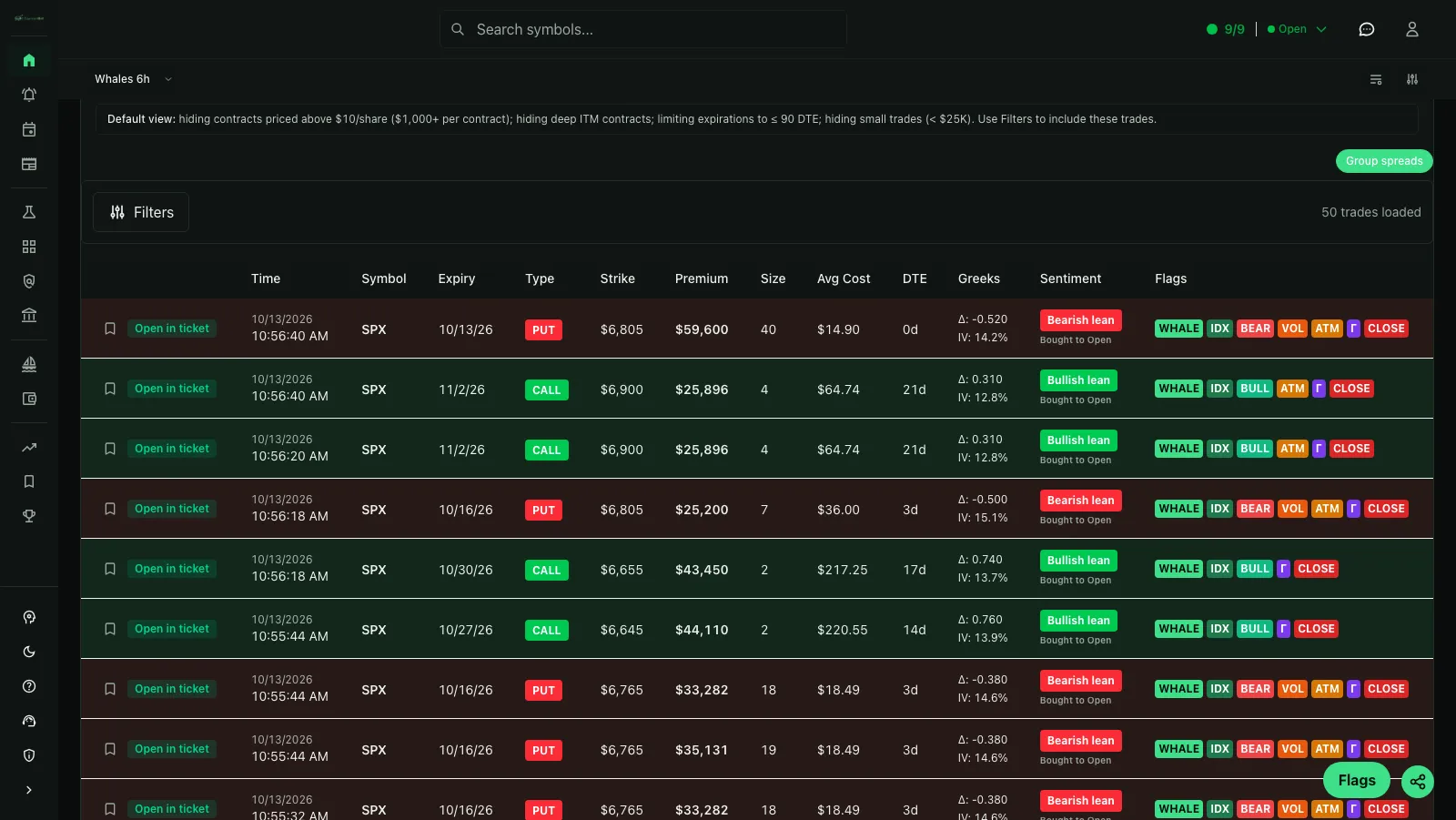
Strategy Lab connects with CaymanBot’s options flow, whale alerts, market charts, paper trading and alert delivery. After a rule set survives historical review, it can become an alert instead of a note that must be checked manually every day.
Backtests are hypothetical and have inherent limitations. They do not represent actual trading, and no result guarantees future performance. Premium members can access Strategy Lab, historical data and alert workflows. Paper trading and simulation are included on the Free plan.