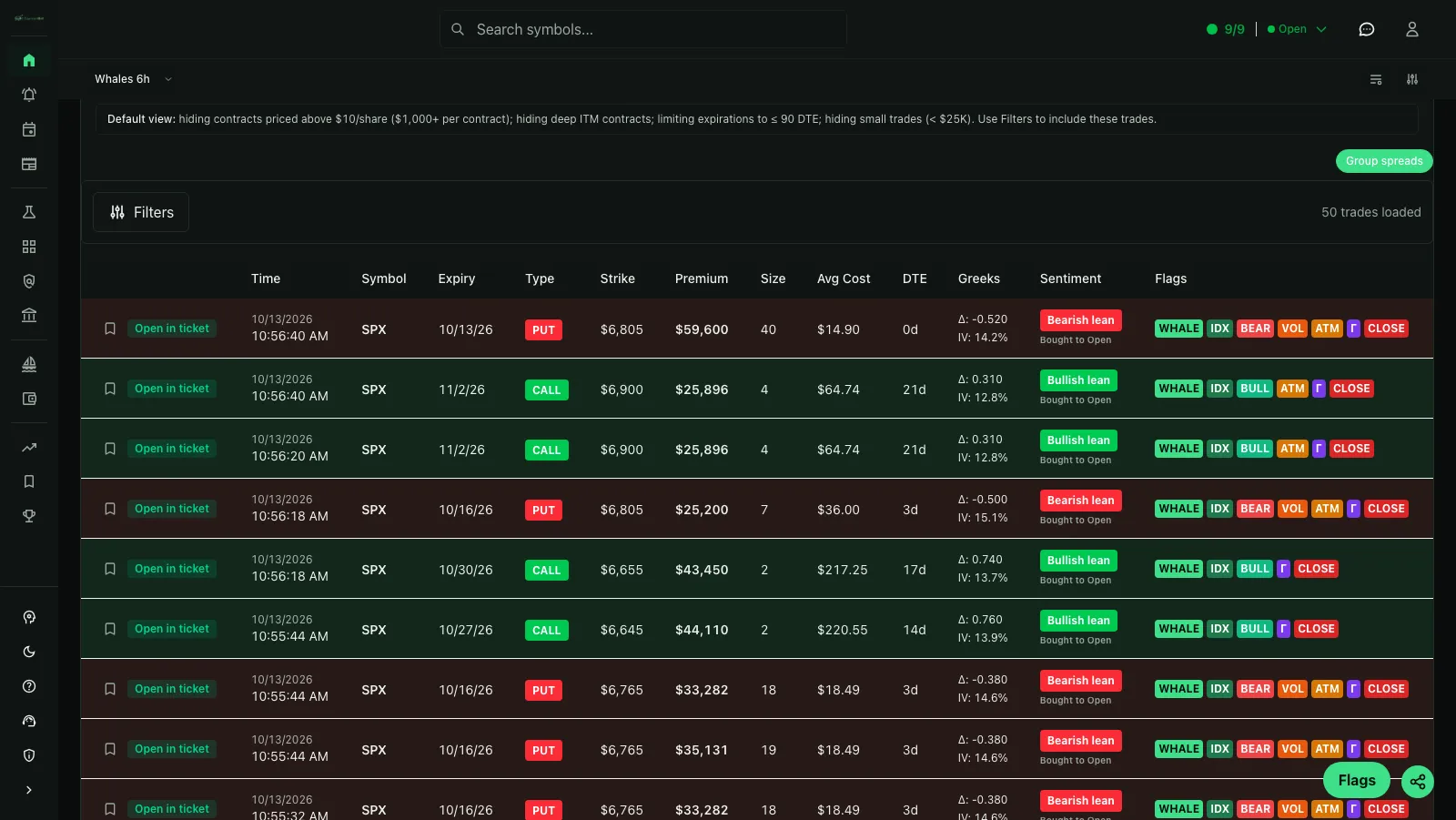
Why 0DTE options move so quickly
With almost no time remaining, a 0DTE contract’s value depends heavily on whether it finishes in the money. Near-the-money gamma can be high, so a small move in the underlying may produce a large change in delta. At the same time, remaining extrinsic value decays toward zero as expiration approaches.
That combination produces leverage and path dependency. A trader can be directionally correct later in the day but still lose because the move arrived too slowly, implied volatility changed or the entry spread consumed too much of the expected payoff.
What same-day flow can reveal
Concentrated activity near major index strikes can help identify where short-term positioning and hedging demand are building. Repeated ask-side calls, protective puts or large spreads may matter around economic releases and intraday breakouts. Yet 0DTE volume is enormous in some products, so absolute contract count alone is a weak filter.
- Compare premium and notional exposure, not only contract quantity.
- Check the distance between spot and strike and the time remaining.
- Look for multi-leg executions and simultaneous underlying trades.
- Review the day’s economic calendar and scheduled announcements.
- Consider pinning and exercise/assignment behavior near the close.
Risk controls for expiration-day options
Spreads can widen rapidly, market orders can fill far from the displayed price and contracts may become difficult to exit. In-the-money equity options can create exercise or assignment exposure, while index options may have different settlement rules. Know the product specification before the closing bell.
Use 0DTE flow as immediate market-structure context, not a reason to skip position sizing. Defined loss, limit orders, a time-based exit and paper testing are especially valuable when the contract can change character in minutes.